
Before & After Photos
Click on a photo to enlarge.
Patching Up Some Raccoon Damage in Freehold, NJ

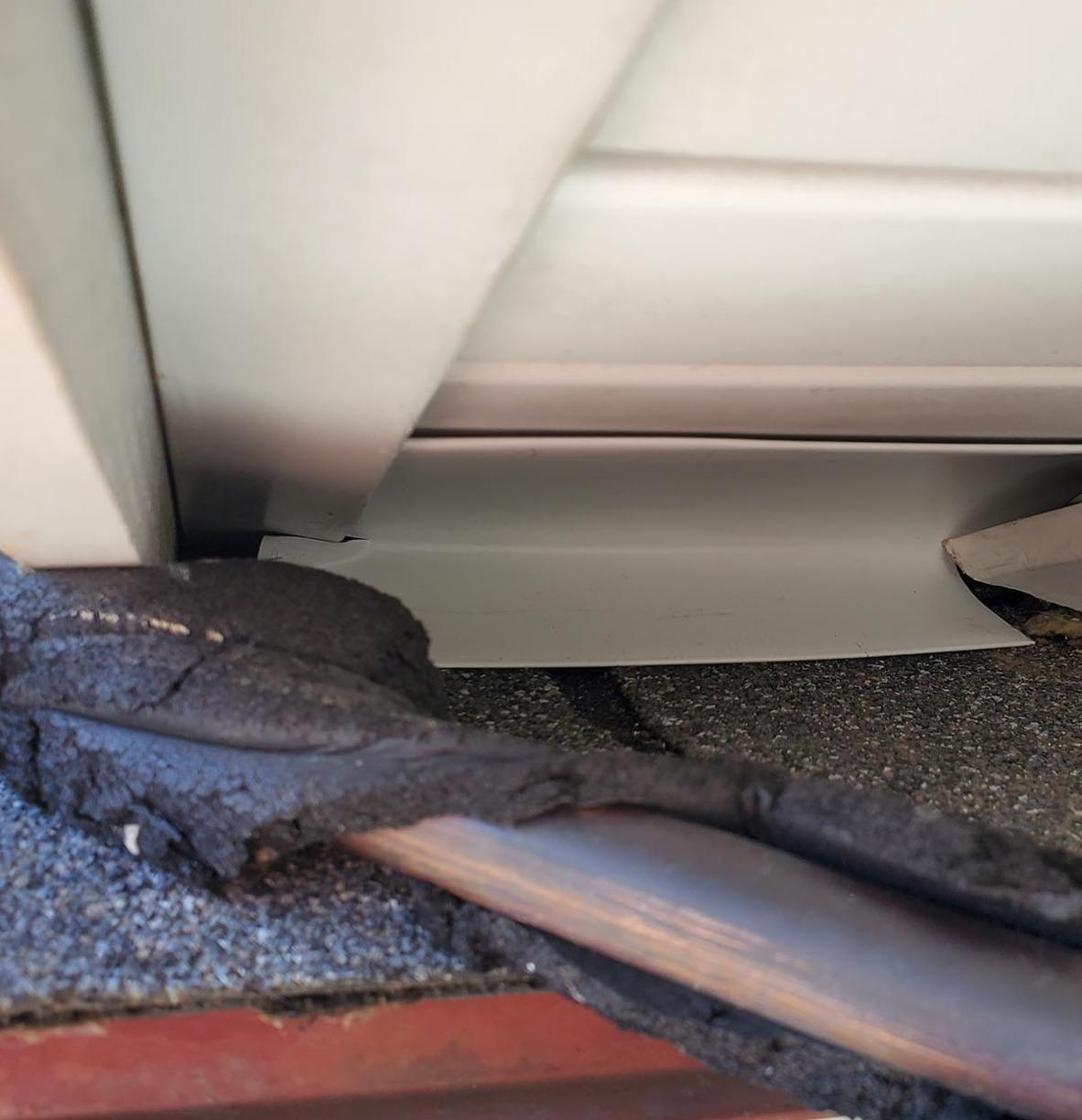
After safely and successfully retrieving a raccoon from this home in Freehold, NJ, we needed to patch up the main access point in the soffit. As we discussed different sealing options with the homeowner, she had mentioned that she didn't want any screws in her soffit.
So we measured out the access point and cut a portion of metal flashing (that match the same color of the soffit area). We then installed it over the access point and secured it in place with a waterproof, premium adhesive.
Dryer Vent Used for Bird Nesting in Freehold, NJ


After hearing birds chirping in her laundry room, this homeowner in Freehold, NJ contacted our Bird Services division to come out and help. After a thorough inspection, we discovered that birds were entering and nesting in a damaged dryer vent. As often happens, birds exploit the vent opening to build a nest inside the home. Damaged exhaust vents not only allow birds and other critters to gain access to your home but also allow moisture to come in, which can lead to mold and mildew problems. However, the biggest risk of all is the nesting material obstructing airflow and creating a fire hazard.
We carefully removed the nesting material and then disinfected the area with a solution that targets and eliminates bird mites. Next, we installed a magnetic vent cover and then sealed the edges with a waterproof, premium adhesive and painted the tips of screws to blend in. Now the dryer vent is properly sealed off without compromising airflow.
Crawl Space Goes From from Costly to Clean in Freehold, NJ


After decades of dealing with a costly crawl space, this homeowner in Freehold, NJ decided it was time to encapsulate it!
First, we removed all the debris, leveled the ground for proper draining, and installed a dimpled drainage matting. The drainage matting allows all excess moisture to work its way over to the sump pump. Once we finished, we installed SilverGlo™ all over the walls of the crawl space. SilverGlo™ is a waterproof foam insulation that seals the walls from outside moisture and humidity to the walls of the crawl space.
Afterward, we installed a vapor barrier. The vapor barrier is a 20-mil 7-ply sandwich of high and low-density polyethylene that is treated with an antimicrobial finish that protects against mold and mildew growth. Lastly, in order to control the high humidity levels in the crawl space and to prevent mold, we installed a SaniDry dehumidifier. These dehumidifiers are maintenance-free, turn on and off automatically with a built-in hygrometer, and there is no water tray to empty or overflow.
Now the homeowner has a healthy and efficient crawl space as well as an extra area he can utilize for storage!
Raccoons Invade Homeowners Shed in Freehold, NJ


As this homeowner in Freehold, NJ was putting his gardening equipment away in his outdoor shed, he came across a raccoon exiting from the gable vent! He closed the door and immediately called Little Rascals for help.
When we arrived, we noticed that the raccoon had destroyed the gable vent in order to gain access to the shed. We temporarily enclosed the area off with hardware cloth and installed a one-way device over it. A one-way device will allow the raccoon to safely leave the area but prevent it from getting back in. We also placed several baited devices nearby.
A short while later, we successfully retrieved the raccoon and relocated it to a new, humane environment. In order to prevent any other raccoons, or any other nuisance wildlife from reinfesting the shed, we installed an XclusionPro® louvered vent guard over the gable vent. This sturdy material is made of expanded galvanneal steel and will exclude all nuisance wildlife.
Community Has a Problem with Pigeons in Freehold, NJ


This community in Freehold, NJ was having issues with pigeons, and other nuisance birds, roosting on the backside of the steps on the main building. The maintenance team had tried to resolve the issue on their own by installing hardware cloth, but that didn't work.
We carefully removed all the hardware cloth & nesting debris, disinfected the area, and installed Bird Slope. Bird Slope is a physical bird deterrent used to block birds from landing or nesting on open ledges. Bird Slope's unique angled design makes it impossible for birds to land or nest in 90° areas such as ledges, window sills, or eaves making it an effective bird deterrent against all nuisance birds.

