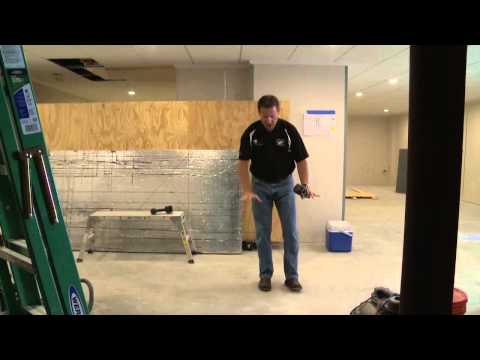
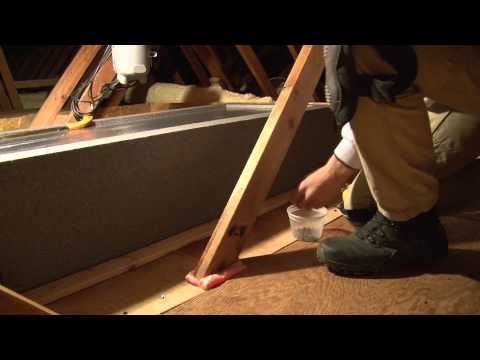
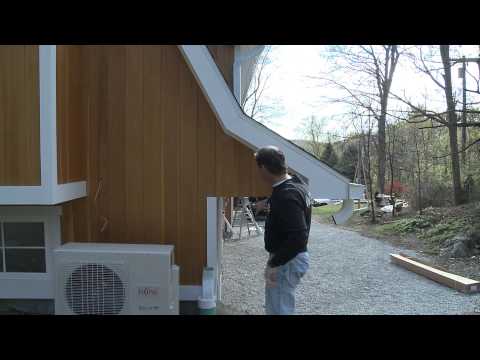
For many decades, the material of choice to insulate homes has been fiberglass. Blown fiberglass is used for the attic whereas fiberglass batts are used for wall cavities, ceilings, and pretty much everything else. Today, it is still a very popular insulation material, and is still used in new construction -- it is inexpensive and most builders and insulation contractors are used to it. Yet, there are several insulation materials available today that far outperform fiberglass insulation in many levels, and in the #61 episode of On the Job Larry Janesky, owner and founder of Dr. Energy Saver, will show us how spray foam insulation outperforms fiberglass batts when it comes to wall cavity insulation in new construction. Larry begins by reminding us that modern houses aren't built as rectangles with gabled roofs anymore. Most new homes have architectural features such as cantilevers, multi level areas, enclosures and fixtures that create irregular wall cavities and many challenges in terms of insulation. The house showcased in this video is one example of this type of modern construction. Fiberglass has an R-Value of 3 per inch while spray foam has a R- Value of 7 per inch. R-Value is a measure of resistance to heat flow, and a lower R-Value per inch means that you need a thicker layer of fiberglass than you would of spray foam to insulate the same area and achieve the same ideal R-Value. The problem is that the fiberglass R-Value is rated only when the material is fully fluffed, not when it is compressed and touching all the surfaces in the cavity, without edge gaps. A small 4% edge gap will cause a 30% decrease in the R-Value of fiberglass insulation. Add to that the fact that fiberglass has no air sealing capabilities, and air flows right through the material and you will begin to understand how it can be easily outperformed by other insulation materials, especially spray foam insulation.Larry walks us through the many architectural and framing features of the building that would create several opportunities for insulation failure if fiberglass were the chosen material -- and he shows us just how easily closed spray foam can be applied to the exact same problem areas. Spray foam insulation expands and effectively fills even the smallest spaces and gaps, leaving no holes in the insulation blanket and air seals the walls as well!
At Dr. Energy Saver, we are always looking for ways to make homes more comfortable and reduce the cost of homeownership by improving energy performance. If you would like to make your home more comfortable, visit our website to locate a dealer in your area.
Watch our other On the Job Videos for more information on energy saving home improvements and subscribe to our YouTube Channel to get the latest updates!